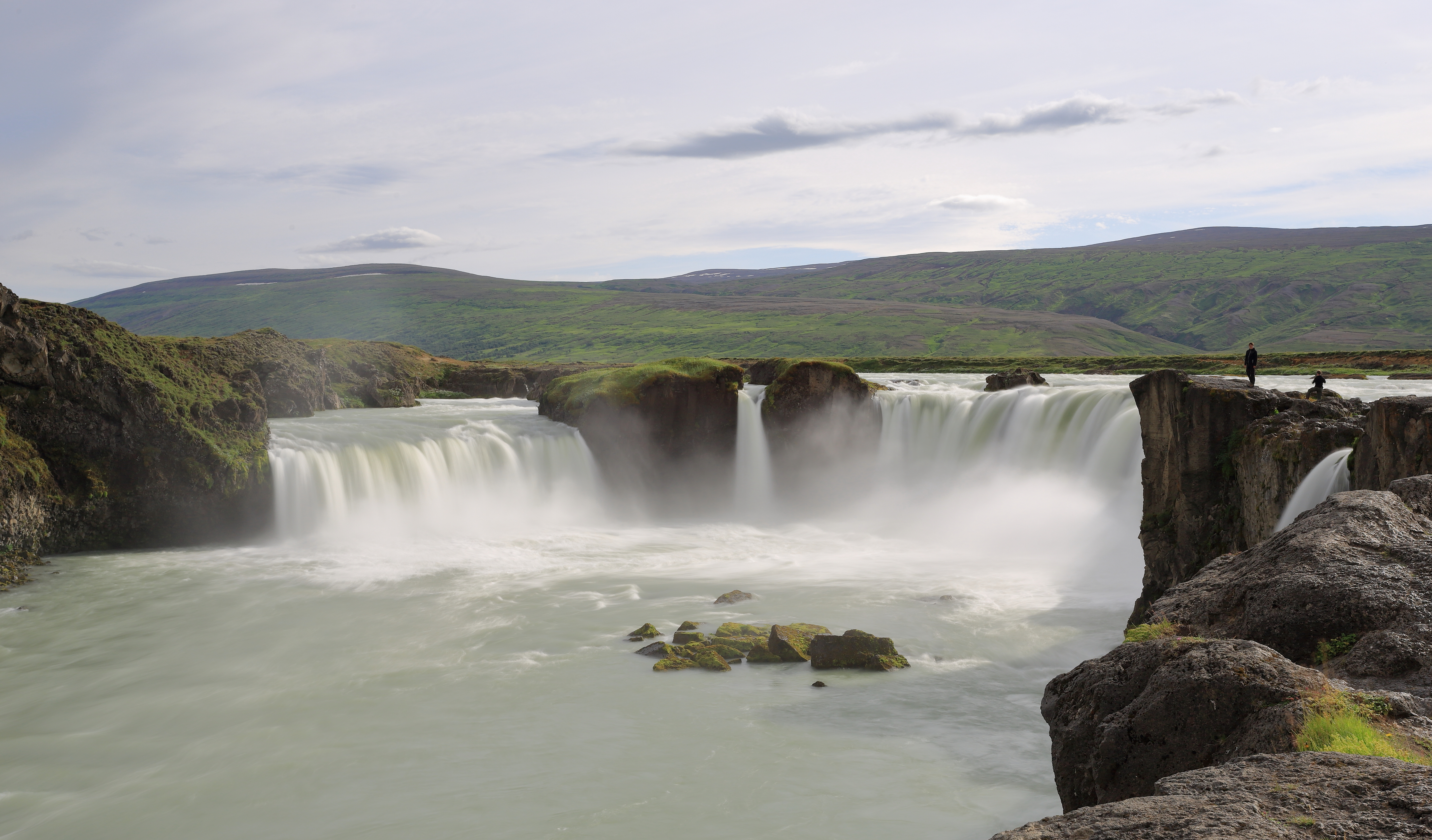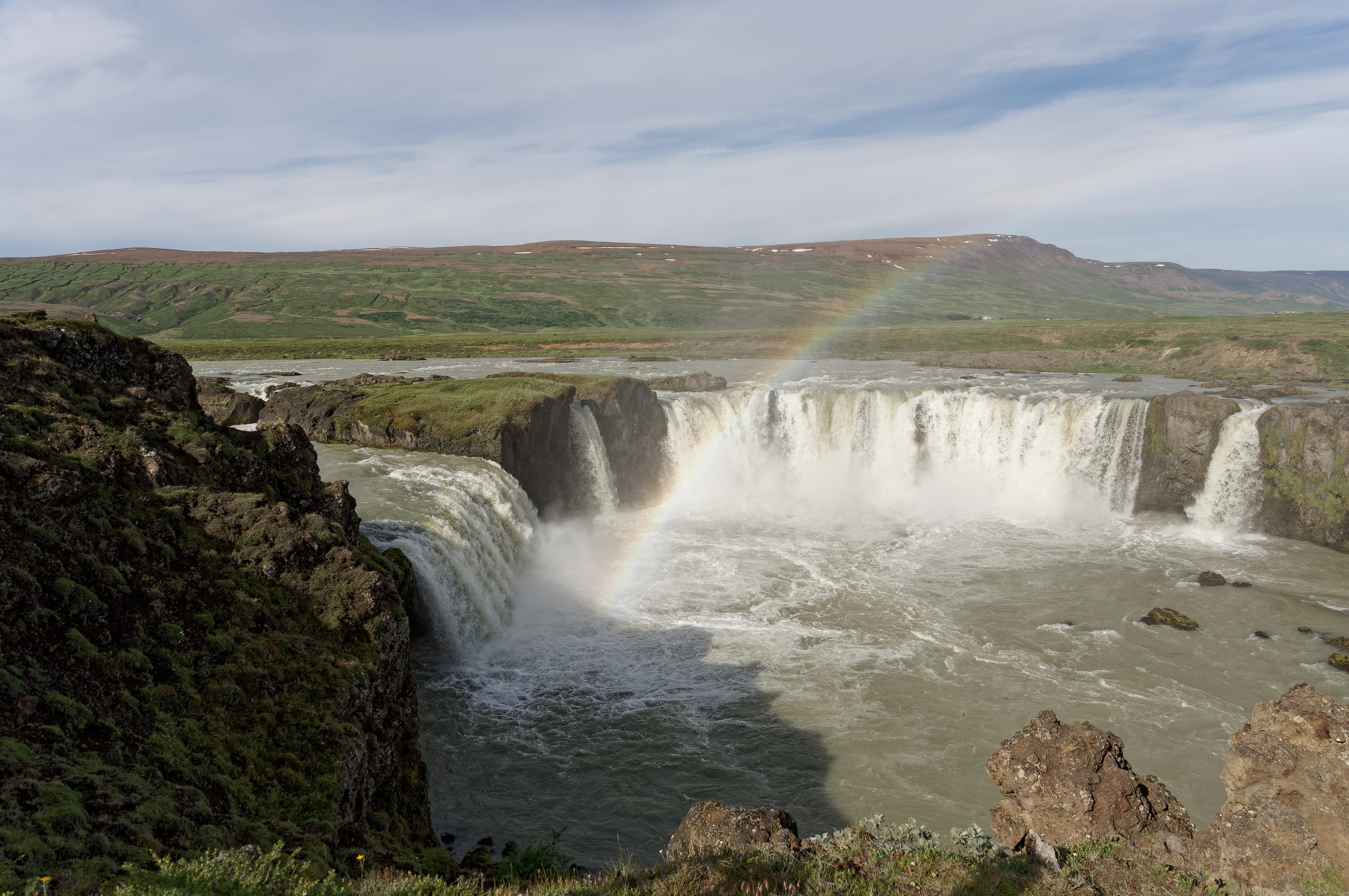
Goðafoss sits on the Skjálfandafljót river in North Iceland, about 50 kilometres east of Akureyri, and the story behind its name is as significant as the waterfall itself. Around the year 1000 AD, a chieftain named Þorgeir Ljósvetningagoði was given the task of deciding whether Iceland would adopt Christianity or remain pagan. After a day and a night of deliberation beneath a fur cloak, he announced his decision: Iceland would convert. On his way home, he cast his statues of the Norse gods into this waterfall. The name Goðafoss, meaning “Waterfall of the Gods,” comes directly from that act. Whether or not every detail of the story is historically precise, the site carries genuine weight.
Why It Is Worth the Trip
The waterfall itself is physically striking in a way that is easy to describe plainly: it spans roughly 30 metres across and drops about 12 metres, forming a wide horseshoe shape across the full breadth of the river. The Skjálfandafljót is a large glacial river, which means Goðafoss carries serious volume. The flow is not a trickle that looks impressive only in photographs. You feel it.
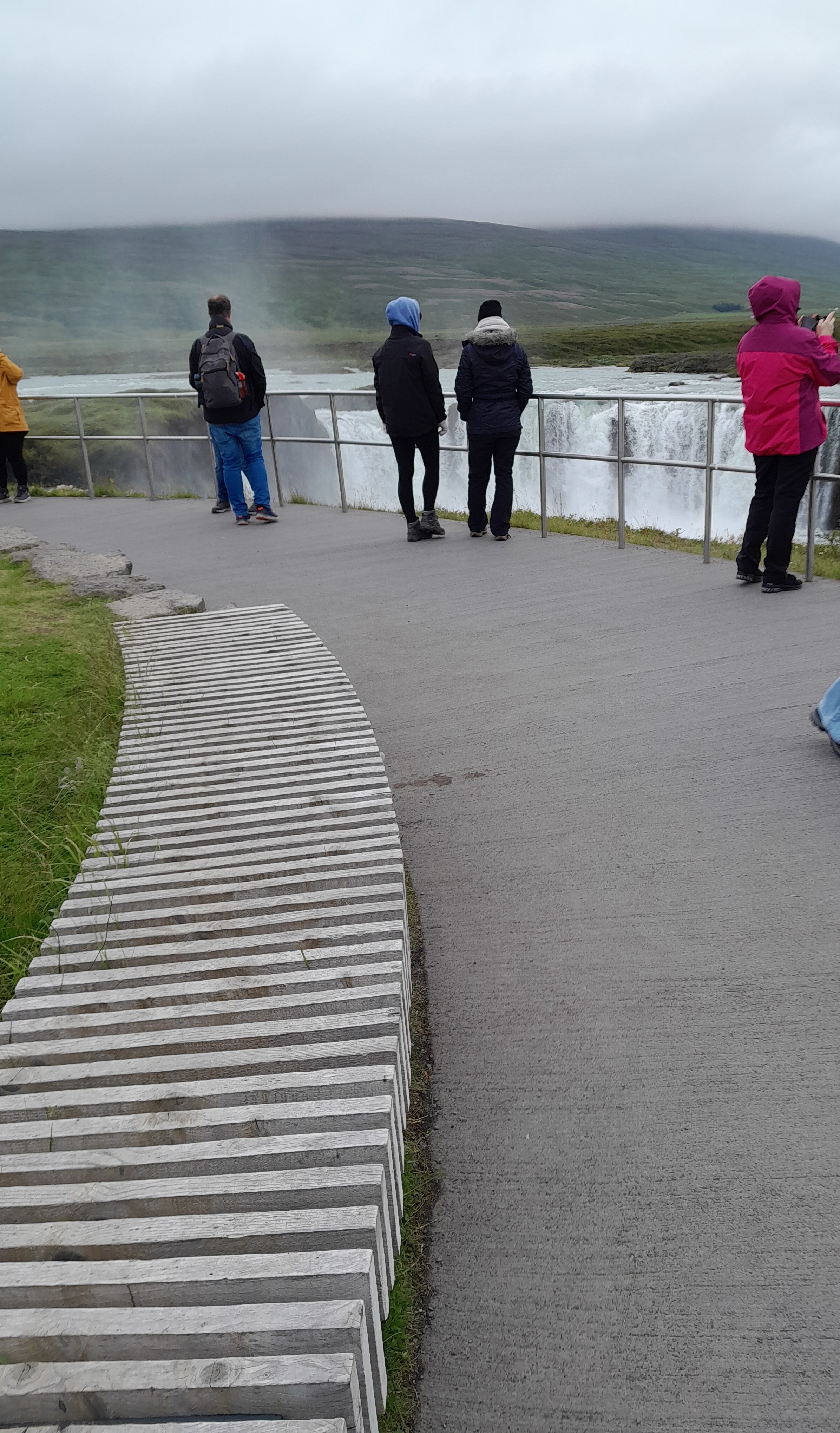
What sets Goðafoss apart from many Icelandic waterfalls is the combination of accessibility and scale. Some large waterfalls require a hike to reach. Goðafoss does not. You can stand at the rim within a few minutes of parking and see the full width of the falls from multiple angles. The surrounding terrain is relatively open, volcanic lava fields and low ground, which means sightlines are clear and there is no sense of strain in getting oriented.
The cultural dimension matters too. This is not just scenery. For Icelanders, this location is connected to a genuine turning point in the nation’s political and religious history. The Alþingi’s decision at the year 1000 was a deliberate act of pragmatic statecraft, and Þorgeir’s waterfall became a marker of that transition. Visiting with that context in mind changes how you look at the water.
How to Get There
Goðafoss is on Route 1, the Ring Road, which makes it one of the easiest major natural sites to reach in all of Iceland. If you are driving the Ring Road from Akureyri heading east, you will reach the falls after roughly 45 minutes to an hour depending on conditions. From Mývatn to the east, it is closer to 30 minutes. The waterfall is signed from the road.
There is a parking area on the western bank with a short, flat walk to the falls. There is also access from the eastern bank, where a small settlement and a petrol station sit nearby. Both sides give views, though the angles differ. The eastern bank tends to be quieter and offers a perspective looking directly into the curve of the falls. The western bank is more developed for visitors and often busier.
Neither approach requires anything beyond ordinary footwear in dry conditions. In winter or after rain, the paths near the rim can be slippery, and care is warranted near the edge. The terrain close to the falls is uneven in places, wet rock and compacted gravel.
What to Expect on Arrival
Plan for about an hour at the site, possibly a little more if you choose to walk both banks, which requires returning to your vehicle and crossing the bridge over the river. The two viewpoints together give a much fuller picture of the falls than either alone.
The spray from the falls is substantial when you stand close. In warm months this is pleasant. In colder months, a waterproof outer layer is worth having. The roar of the water is loud enough that conversation close to the edge requires some effort.
The western bank path follows the river upstream slightly, allowing views from the side as well as head-on. From certain positions you can see the full horseshoe curve and watch the water split and reconnect across the rocky shelf before dropping. The colour of the water varies with season and weather. In summer, glacial melt can give the Skjálfandafljót a grey-green cast. After heavy rain, it runs murkier.
Facilities exist on both sides, though confirming current availability before relying on them is always sensible in rural Iceland. The eastern bank has a small service station that has historically provided food and fuel.
When to Go
The falls run year-round. Goðafoss is accessible in winter, though driving Route 1 in winter requires appropriate tyres and attention to road conditions, which can change quickly in North Iceland. The road authority’s website (road.is) is the reliable source for current conditions.
Spring and early summer bring high water levels as snow melts in the highlands above. The river is powerful and the falls are at their most voluminous. Long daylight hours in June and July allow visits at any time of day, and the low midnight sun can produce warm side-lighting that is good for photography if that interests you.
Late summer and autumn see the water level drop somewhat, which can actually reveal more of the rocky structure beneath. The surrounding vegetation takes on yellow and rust tones in September and into October.
Winter visits are possible but the site is often icy, the light is limited, and conditions require more preparation. Frost and ice can form on the rocks close to the falls, and some paths that are straightforward in summer become genuinely hazardous.
Visibility matters here. The falls sit in open terrain, but overcast skies flatten the visual contrast. Clear days make the foam and the dark basalt rim sharper. That said, a grey day with the water thundering in full winter flow has its own quality.
Tips and Responsible Visitor Notes
A few practical points worth keeping in mind:
- Stay on marked paths near the edge. The rock close to the falls is wet and often covered in algae. The drop is real. Every year visitors in Iceland are injured at waterfall sites by underestimating slippery surfaces.
- If you plan to visit both banks, note that the bridge crossing adds a few minutes of driving. It is worth doing rather than trying to see everything from one side.
- The site is popular with bus tours, particularly in summer. Arriving early in the morning or later in the evening (both feasible in the long summer days) generally means fewer people.
- There is no admission fee to view the falls, but this should not translate into casualness about the site. Litter and path erosion are real problems at high-traffic waterfalls in Iceland.
- Goðafoss pairs naturally with Mývatn, which is roughly 30 kilometres to the east along Route 1. If you are spending time in the north, treating Goðafoss as a stop between Akureyri and the Mývatn area is a sensible way to structure the day rather than making it a separate trip.
The waterfall does not need embellishment. It is large, historically significant, and easy to reach. Those three things together are rarer than they might seem.